径向轮胎与斜交轮胎:技术分野
在轮胎工业的百年历程中,斜交轮胎与子午线轮胎的技术分野,是推动技术迭代的关键分水岭。这一分野的核心,在于两者帘布层结构设计的根本性差异。
这两种结构设计代表了两种截然不同的技术路线,不仅决定了轮胎的核心性能,还深刻影响了其在不同应用场景下的适应性,甚至在一定程度上左右了全球轮胎产业的发展格局。
斜交轮胎作为最早的轮胎结构形式之一,沿用了传统纺织品的加固逻辑,采用交叉网状的帘布层结构。在制造过程中,相邻帘布层的帘线以45-65度的角度交错排列,这种方法类似于帆布的编织工艺,层层叠加,构建出紧密而坚固的轮胎胎体结构。
As one of the earliest tire structural forms, bias-ply tires follow the reinforcement logic of traditional textiles, employing a cross-linked mesh cord structure. During manufacturing, the cords of adjacent ply layers are arranged at an angle of 45-65 degrees, a method similar to canvas weaving, layering to form a dense and rigid tire carcass structure.

从机械原理的角度来看,这种交叉联锁结构能将轮胎行驶过程中承受的纵向与横向力均匀分散至整个胎体,从而赋予斜交轮胎卓越的纵向刚度。
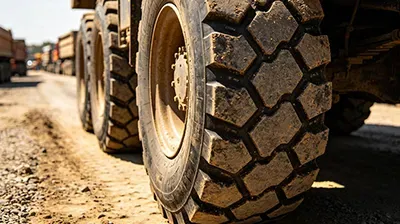
在车辆启动、制动以及颠簸路面的冲击过程中,这种纵向刚度有效减少了轮胎变形,保持了轮胎形状的稳定,从而提供了优异的抗冲击性能。例如,在矿山和建筑工地等复杂工况下,载重车辆行驶于布满碎石的道路上,凭借其坚固的胎体结构,能有效抵御石块的冲击,降低轮胎损坏的概率。
然而,斜交轮胎的多层帘布设计也带来了显著的缺点。多层帘布的叠加显著增加了胎体的厚度,直接导致轮胎重量上升。在车辆行驶过程中,较重的轮胎需要更多的能量来克服自身惯性和地面摩擦力,从而显著增加了滚动阻力。
滚动阻力较高不仅会增加燃油消耗和运营成本,还会在长时间行驶中产生更多热量。轮胎内部积聚的过多热量难以迅速散发,这会加速橡胶老化和帘布层疲劳损伤,从而缩短轮胎的使用寿命。
与此同时,由于胎体较厚且重,斜交轮胎的弹性相对较差,导致在行驶过程中对路面颠簸的过滤效果不佳,影响了乘坐舒适性。这大大限制了它们在以舒适性为首要考虑的乘用车领域的应用。
However, the multi-layered ply design of bias-ply tires also brings significant drawbacks. The stacking of multiple plies significantly increases the carcass thickness, directly leading to increased tire weight. During vehicle operation, the heavier tire requires more energy to overcome its own inertia and ground friction, resulting in a significant increase in rolling resistance.
Higher rolling resistance not only increases fuel consumption and operating costs but also generates more heat during prolonged driving. Excessive heat accumulation inside the tire, difficult to dissipate quickly, accelerates rubber aging and ply fatigue damage, shortening tire lifespan.
Meanwhile, due to their thicker and heavier bodies, bias-ply tires have relatively poor elasticity, resulting in ineffective filtering of road bumps during driving and impacting ride comfort. This significantly limits their application in passenger vehicles where comfort is paramount.

子午线轮胎的出现是轮胎行业一次颠覆性的技术革命,其核心创新同样聚焦于帘布层结构的设计。与斜交轮胎帘线交叉排列不同,子午线轮胎的帘线以接近零度角(通常在0-5度之间)沿径向垂直于胎面中心线排列。这种排列方式使帘线从轮胎胎圈延伸到胎面,形成坚固的径向支撑结构,恰似地球仪上的经线一般。
更重要的是,子午线轮胎在胎面下方采用高强度材料(如钢丝和芳纶纤维)制成的刚性带束层。这一带束层以较小角度(通常为10-20度)环绕胎面,紧密包裹着径向排列的帘线,形成了“径向+周向”的复合结构。
这一独特的复合结构带来了一系列革命性的性能提升。在接地性能方面,刚性带束层有效限制了行驶过程中轮胎冠部的周向变形,使得轮胎与地面的接触面积更大,接地压力分布更为均匀。
均匀的地面压力不仅减少了局部轮胎磨损,延长了轮胎寿命,还显著提升了轮胎的抓地力,尤其是在湿滑路面或紧急制动时,能有效缩短刹车距离,提高车辆安全性。
关于滚动阻力,由于帘线的径向排列,轮胎滚动时帘线的变形较小,显著降低了能量损失。相较于斜交轮胎,子午线轮胎的滚动阻力通常要低30%-40%。
降低滚动阻力对于减少车辆燃油消耗至关重要。例如,配备子午线轮胎的乘用车通常能实现燃油经济性5%-10%的提升,这在能源日益紧张的当下,无疑具有显著的经济效益和环保价值。
此外,子午线轮胎显著提升了操控稳定性。其刚性带束层确保了胎面的卓越刚性,使得转弯时响应更为迅速精准,从而优化了车辆的操控性能,满足了驾驶者对性能的追求。
然而,子午线轮胎的设计并非完美无缺。其侧壁相对薄弱是一个显著弱点。由于帘线呈径向排列,侧壁得到的帘线支撑较少,且缺少带束层的加强,这使得其抗冲击能力远不如斜交轮胎。
在驾驶过程中,若轮胎侧壁遭受强烈的横向冲击,比如高速驶过坑洼或撞击路缘,容易导致鼓包、裂纹甚至爆胎。
Regarding rolling resistance, due to the radial arrangement of the cords, the deformation of the cords during tire rolling is smaller, significantly reducing energy loss. Compared to bias-ply tires, radial tires typically have 30%-40% lower rolling resistance.
Lower rolling resistance is crucial for reducing vehicle fuel consumption. For example, passenger cars equipped with radial tires typically experience a 5%-10% improvement in fuel economy, which undoubtedly has significant economic and environmental value in today's increasingly energy-constrained environment.
Furthermore, radial tires offer significantly improved handling stability. The rigid belt layer provides excellent tread rigidity, resulting in a quicker and more precise response during cornering, leading to better vehicle handling and meeting the driver's demands for performance.
However, the radial tire design is not without its flaws. Its relatively weak sidewall is a significant weakness. Due to the radial arrangement of the cords, the sidewall has less cord support and lacks the reinforcement of the belt layer, making its impact resistance far inferior to bias-ply tires.
During driving, if the sidewall experiences a significant lateral impact, such as driving at high speed over potholes or colliding with a curb, it is prone to bulges, cracks, or even blowouts.

这种不足在特定应用中尤为明显,比如采矿和建筑行业,这些领域的车辆常在崎岖地形上行驶,增加了侧壁受冲击的概率。在这些情况下,子午线轮胎的损坏率相对较高,因此斜交轮胎仍保有一定的市场份额。
从市场应用的角度来看,随着汽车工业的快速发展及对轮胎性能要求的不断提高,子午线轮胎凭借其在滚动阻力、燃油经济性、操控稳定性和使用寿命等方面的显著优势,已逐步取代斜交轮胎,成为主流乘用车及商用车(如轿车、客车和卡车)的首选轮胎类型。
目前,子午线轮胎已占据全球市场份额的90%以上,特别是在乘用车领域,几乎实现了全覆盖。而斜交轮胎因其优异的抗冲击性和较低的生产成本,在轮胎性能要求相对较低且工况较为恶劣的领域仍有应用,如农用机械、工程机械、低速货车及部分特种车辆中。
在技术发展趋势方面,斜交轮胎的创新步伐相对较缓,主要集中于优化帘线材料(如采用高强度尼龙帘线)与改进橡胶配方,以增强其耐磨性和抗老化性能,从而进一步提升其在特定应用场景下的适用性。
同时,径向
In terms of technological development trends, innovation in bias-ply tires has been relatively slow, mainly focusing on optimizing cord materials (such as using high-strength nylon cords) and improving rubber compounds to enhance wear resistance and anti-aging properties, further improving their applicability in specific scenarios.
Meanwhile, radial 轮胎正朝着更高性能、更轻重量、更高能效和更环保的方向迅速发展。
例如,在材料方面,采用新型高强度、低滚动阻力的橡胶复合材料及高性能纤维材料,进一步降低滚动阻力,提升轮胎的强度与耐用性。在结构设计上,运用有限元分析等先进技术优化帘线排列和带束层结构,提高轮胎的操控性能与舒适度。
在智能方面,部分高端子午线轮胎还集成了传感器等智能部件,能够实时监测胎压、温度及磨损状况,并将数据传送至车辆控制系统,为驾驶者提供安全预警与保养建议。
In terms of intelligence, some high-end radial tires also integrate intelligent components such as sensors, which can monitor tire pressure, temperature, and wear status in real time and transmit the data to the vehicle control system, providing drivers with safety warnings and maintenance suggestions.