Tire Tread Groove Design for Wet Roads
Rainy weather presents a high-risk scenario for vehicle driving safety. Rainwater forms a smooth film between the tires and the road surface, significantly reducing traction and easily leading to increased braking distance, vehicle skidding, and loss of steering control. In overall vehicle safety during rainy weather, the tires, as the only component in contact with the ground, play a decisive role in their wet-weather performance.
To choose tires suitable for rainy driving and with a higher safety factor, the key lies in understanding the design of the tread grooves and pattern – their synergistic effect is crucial for ensuring drainage and grip on flooded roads.
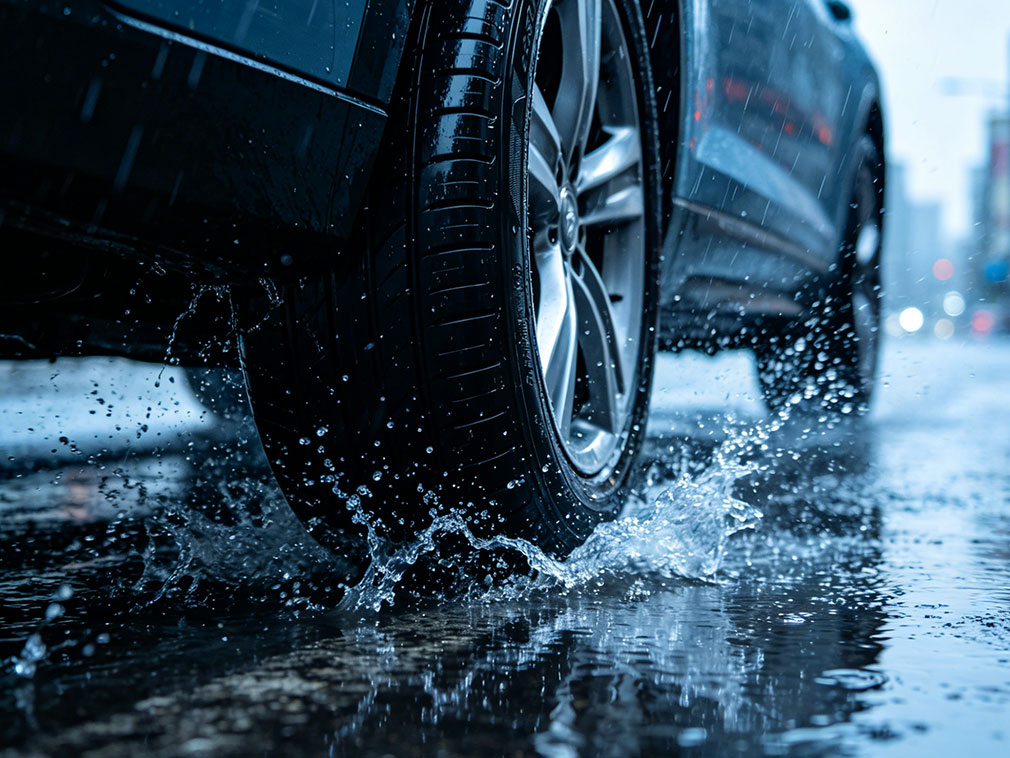
The tire's drainage system consists of longitudinal main grooves and lateral auxiliary grooves, each with its own function and working in concert. The longitudinal main grooves, parallel to the tire's rolling direction, are the core, fast-draining channels, with a drainage efficiency far exceeding other tread structures.
They quickly guide and drain water accumulated under the tread, effectively preventing slippage caused by water film buildup. Generally, the deeper and wider the main grooves, the larger the water storage and drainage space, and the stronger the drainage capacity.
However, tire groove design follows a clear performance balance logic; wider and deeper grooves are not necessarily better. With a constant contact area, excessively wide main grooves directly compress the contact area of the tread rubber, leading to decreased grip and braking stability on dry roads, and also affecting tire wear resistance and lifespan.
Therefore, tires with high wet-weather safety performance use precise calculations to balance the width and depth of the main grooves with the tread contact area, taking into account both drainage efficiency in rainy weather and stability on dry roads. Currently, tires suitable for rainy areas often use a design with three or four symmetrical longitudinal main grooves, achieving a good balance between drainage efficiency and overall driving performance.
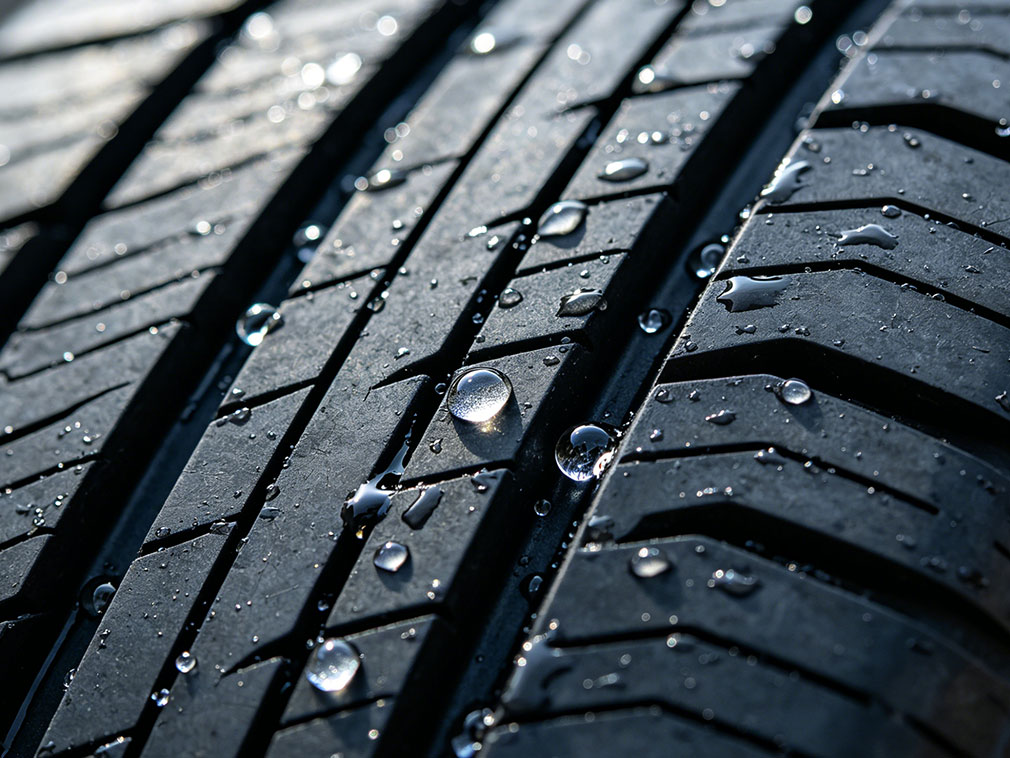
Transverse tread grooves, as auxiliary drainage structures, are an important supplement to the main grooves. These grooves are perpendicular or inclined to the rolling direction, mainly catching water drained by the main grooves and quickly discharging it to the sides of the tire, preventing water from accumulating in the grooves.
Meanwhile, the fine lateral tread blocks increase the roughness of the tread texture, piercing the water film on shallow wet roads, allowing the rubber to better conform to the road's micro-texture and slightly improving grip at low speeds. The crisscrossing grooves create a complete tread drainage network, adapting to water depths of varying sizes.
High-weather performance tires often incorporate sipes in the base grooves, a key design feature for enhancing high-speed driving safety in rainy conditions. At high speeds, the water film on the road surface easily forms a stable waterproof layer, which ordinary tires struggle to break through quickly, easily leading to hydroplaning and loss of control.
The fine sipes in the tread grooves, with their sharp cutting structure, actively pierce the continuous water film formed at high speeds, allowing the tread rubber to directly adhere to the road surface, significantly increasing safe driving speeds on wet roads and effectively mitigating the risk of high-speed skidding.
In addition, the tire's tread pattern layout and land-to-sea ratio (the ratio of tread block area to groove area) also directly affect safety in rainy conditions. Asymmetrical tread pattern tires typically feature fine, deep grooves on the inner side, specifically designed for drainage and water film breaking; the outer side uses rigid tread blocks to ensure steering grip, balancing daily commuting and high-speed driving.
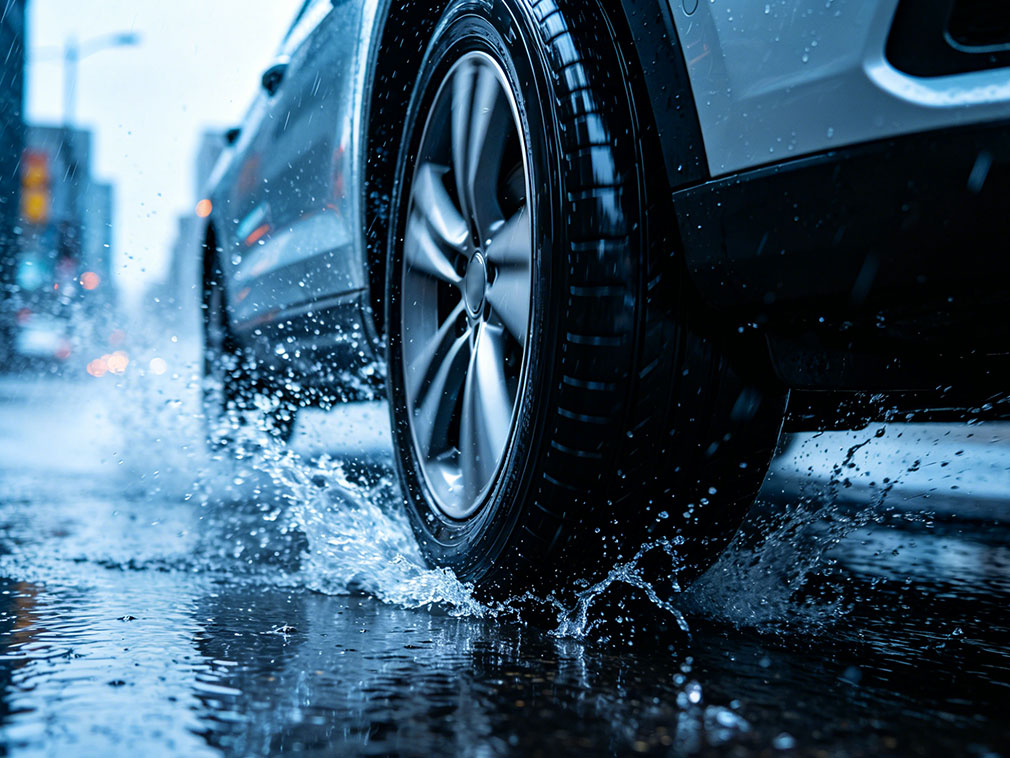
It's also important to note that tire treads gradually wear down with use. As the grooves become shallower and the sipes lose effectiveness, the drainage and water-breaking ability will significantly decrease. Therefore, regularly checking the tread depth and promptly replacing worn tires is an essential part of ensuring safe driving in rainy weather.