中国的绿色轮胎标签: 好处
China encourages and promotes the development of green tires by enterprises, bringing green labels into the public eye. What are green tires? What are green labels? Green labels are used to prove to consumers that the entire process, from product development to production, transportation, sales, use, and recycling, complies with environmental standards and is harmless to the ecological environment and human health.
Green tires are not just an empty concept; they can bring tangible low-carbon, energy-saving, and environmental benefits to the country while providing consumers with safer performance.

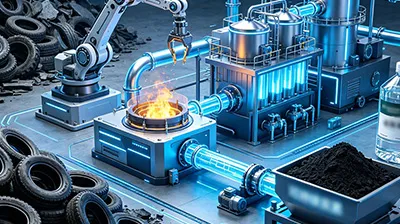
Compared with traditional tires, green tires have advantages such as better elasticity, lower rolling resistance, and reduced fuel consumption, effectively reducing vehicle fuel consumption by 3%-8%, cutting carbon dioxide emissions, shortening braking distances on wet roads, improving driving safety, and reducing the "black pollution" caused by waste tires, achieving a balance between ecological benefits and user experience.
Are green tire standards mandatory? Currently, China does not have mandatory regulations on tire labels; participation by enterprises is entirely voluntary. However, in the future, relevant authorities will undoubtedly strengthen label management to prevent continued market chaos.
According to a response issued by the Ministry of Industry and Information Technology at the end of 2024, China has established a tire label application and management platform. By the end of 2023, 73 tire companies had completed registration, and 146 tire labels covered 855 specifications, indicating that industry standardization is gradually accelerating.
The importance of labels is self-evident. They represent product performance and, more importantly, indicate that the product has passed relevant certifications and tests, reducing the likelihood of consumers purchasing counterfeit products.
For consumers, tire labels are like "product manuals," clearly outlining the core performance of tires and helping avoid blind selection. For enterprises, labels reflect product competitiveness; companies actively participating in label certification are more likely to gain market recognition.
What does tire label testing include? The technical specifications of China's tire labels align with those of the European Union, including tests for tire noise, skid resistance, and rolling resistance. However, the numerical standards in China's tire label regulations are stricter.
Specifically, rolling resistance directly affects vehicle energy consumption, and China's labeling standards have stricter numerical requirements than the EU, helping the automotive industry achieve its "carbon reduction" goals.
Wet grip performance is divided into different grades; the higher the grade displayed on the label, the better the tire's grip on rainy or icy roads, effectively reducing traffic accidents. Noise levels correspond to different decibel standards, and clear labels help consumers choose products with better noise reduction performance, meeting the high demands for quietness in current new energy vehicles.

Under the current circumstances, breaking through international trade green barriers and occupying the technological and economic high ground in the global tire industry is a long-term development strategy for China's tire industry. Since 2026, the EU, the United States, Russia, and other countries and regions have successively introduced new trade and environmental policies.
The EU's Carbon Border Adjustment Mechanism has officially entered the mandatory collection phase, setting excessively high carbon emission intensity values for Chinese tires. Russia has also increased environmental taxes on tires exceeding polycyclic aromatic hydrocarbon (PAH) limits. These green barriers severely restrict China's tire exports.
Data shows that in 2025, China's rubber tire export volume reached 9.65 million tons, a year-on-year increase of 3.6%, but export value only grew slightly by 2%, with weak growth in unit prices. One core reason is that some domestic tires lack unified and standardized green label certification, making it difficult to align with international standards.
To address this issue, it is necessary to accelerate the adjustment of the tire industry and product structure. The current urgent task is to introduce relevant regulations as soon as possible, unify tire label categories, and ensure that domestic tires are fully labeled with energy-saving and environmentally friendly tags.
At present, some leading enterprises have already taken the lead. For example, Guizhou Tire, a national-level green factory, has launched a series of green products, with green materials accounting for 45.88% of its products, enhancing its competitiveness in the high-end market through label certification.
Industry experts state that unifying tire label standards can not only regulate market order and eliminate issues such as false and chaotic labels but also guide enterprises to increase investment in green technology research and development, promoting the tire industry’s transition to low-carbon, environmentally friendly, and high-end products.

At the same time, relevant departments need to strengthen policy promotion and supervision, improve the supporting standard system, and promote the transition of tire labels from "voluntary participation" to "standardized guidance," helping China's tire industry break through green barriers, occupy a more advantageous position in the global market, and achieve a win-win situation for ecological, economic, and social benefits.