汽车以外的轮胎出口强国
How China's Tire Industry Surpasses the Electric Vehicle Boom
While the world focuses on China's electric vehicles flooding global markets, a much older and less conspicuous industry has long been laying its global groundwork—tires. After nearly a century of development, this industry has operated almost silently in the public eye, but its globalization story began twenty years before the first automobile factory broke ground.
A Head Start of Twenty Years
In October 1934, the Greater China Rubber Factory in Shanghai produced China's first automobile tire under the brand "Double Coin." At the time, the market was dominated by foreign brands, but this single tire broke their monopoly. Later, the company merged with Zhengtai Rubber to form today's Double Coin Tire Group.
In contrast, the starting point of China's automobile industry was July 15, 1953, when the First Automobile Works was founded. The twenty-year gap is significant. Before any automobile factories existed, tire manufacturers were already climbing the technological ladder—reverse engineering, introducing production lines, and mastering radial tire technology. These tuition fees were paid long ago.
35% of the Global Market, A Complete Chain
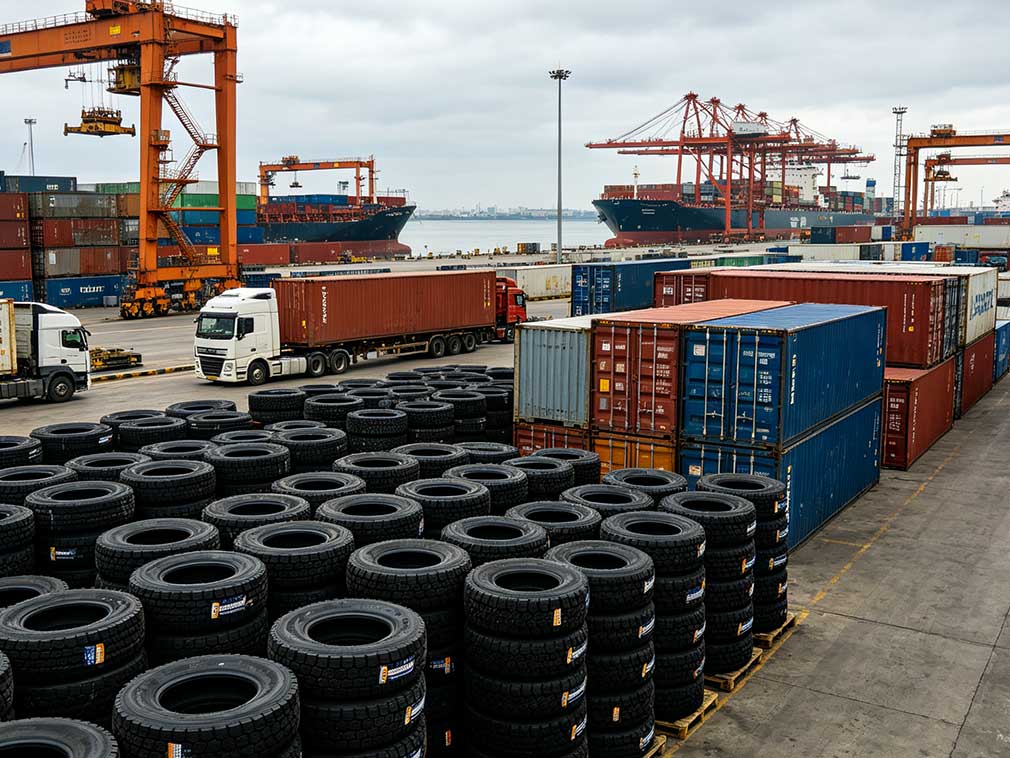
By 2024, China produced approximately 1.17 billion rubber tires, with exports exceeding $20 billion, accounting for about 35% of the global market share. Exports covered over 100 countries, with Brazil being the largest destination. Brands like Zhongce, Linglong, Sailun, Triangle, and Double Coin consistently ranked among the global top 75.
Looking upstream and downstream: natural rubber processing, carbon black, steel cord, tire manufacturing, distribution channels—every link is controlled domestically. While automakers struggle with dependence on high-end chips and core algorithms, tire manufacturers face no such bottlenecks.
Another often-overlooked fact: the tire industry has long been tempered in open competition. Domestic brands dominate the replacement market and the commercial vehicle tire market. Simply put, China's automakers grew in the greenhouse of joint ventures, while tire companies competed in open markets from day one.

Overseas Factories—A Decade Ahead
When the U.S. imposed special safeguard tariffs on Chinese tires in 2009, followed by EU anti-dumping measures, the industry didn't wait but acted. By the end of 2024, 12 companies, including Zhongce, Linglong, Sailun, General Technology, and Sentury, had established 27 production bases across four continents—Thailand, Vietnam, Cambodia, Indonesia, Mexico, Serbia, and Morocco. In 2024 alone, 15 companies launched 19 projects, investing over 30 billion yuan in new capacity.
This is not just simple relocation but a resilient cross-regional network. When one market raises tariff barriers, orders can seamlessly shift to another source. Thailand serves North America, Serbia penetrates Europe, and Mexico leverages USMCA to access the U.S. This operational structure has been refined for over a decade.
The large-scale overseas expansion of the automotive industry, driven mainly by electric vehicles, is a very recent phenomenon. Most overseas factories are still in the ramp-up phase, addressing various issues.
An Industry Not Dependent on New Car Sales
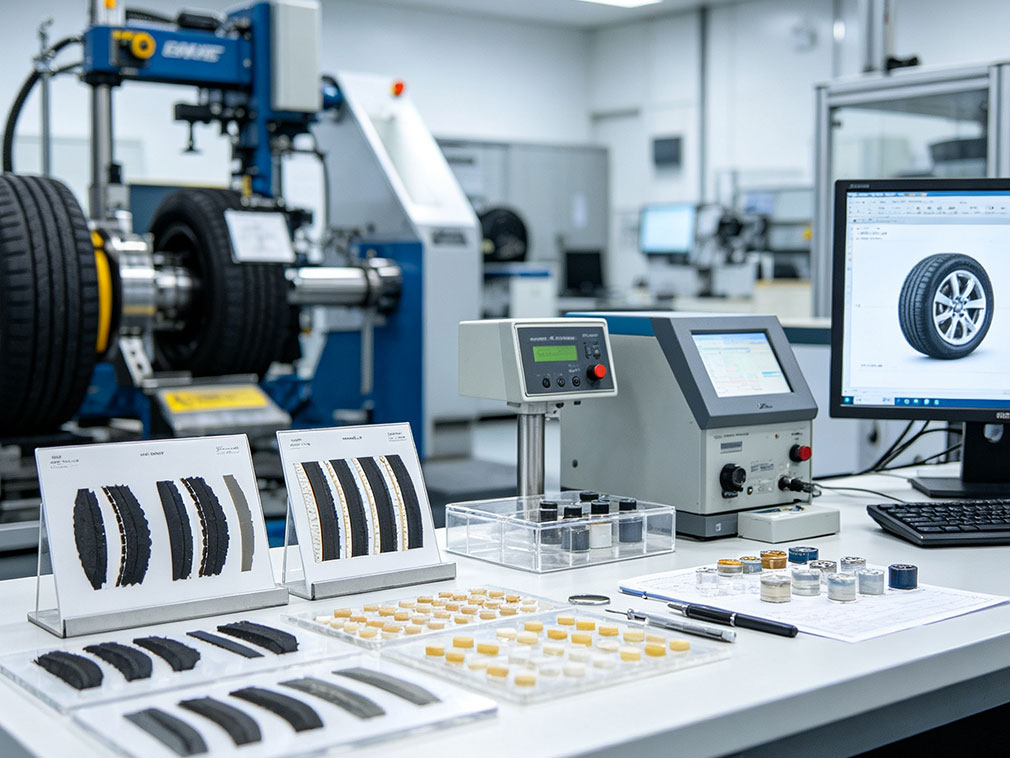
Structurally, tires enjoy an advantage that automakers can only envy: demand is not dependent on new car sales. According to the Ministry of Public Security, by the end of 2025, China's vehicle ownership is expected to reach 366 million. Every one of these vehicles requires regular tire replacements. New car sales may fluctuate, but replacement demand remains steady.
Export distribution is also highly diversified. In 2024, Latin America, the EU, and ASEAN collectively absorbed nearly half of total tire exports, with developing countries particularly reliant on China's commercial vehicle tires. In contrast, car exporters' survival is closely tied to new car sales cycles. Demand declines trigger chain reactions: idle capacity, inventory backlogs, and cash flow pressures.
Obvious Cracks
This story is not all about victories.
In the high-end passenger car original equipment market, Chinese brands hold less than 10% market share. Traditional leaders like Michelin and Bridgestone dominate about 80% of global industry profits through technology and brand value. Chinese companies are trapped in a brutal squeeze: price wars at the bottom and ceilings at the top.
Profit margins tell a grim story. Industry margins shrank from 5.3% in 2020 to less than 3% in 2023. In 2024, total profits fell another 8.5% year-on-year, with more than half of listed tire companies experiencing profit declines. In some tire-producing provinces, factory density has led to industrial parks operating at less than 60% capacity. Last year, a record number of tire retail stores closed due to credit-induced cash flow crises.
Two Lanes, One Road
Taking a step back, a clear pattern emerges. In terms of industrial accumulation, supply chain integrity, global layout maturity, and cyclical resilience, China's tire industry indeed outpaces its automotive "sibling." For nearly a century, it has thrived without the protective umbrella of joint ventures, relying solely on private enterprises competing in the market.
However, the label of "big but not strong" still lingers. Frontier material research lags behind, high-end brands have yet to take shape, and barriers in the original equipment market remain difficult to break through.
Looking ahead, tire manufacturers must conquer the high-end original equipment market and seize the window of opportunity brought by the popularization of electric vehicles. Automakers need to accelerate the construction of overseas factories and gain experience in localized operations. When these two industries address their respective shortcomings, China's automotive supply chain will finally possess truly battle-tested depth.